
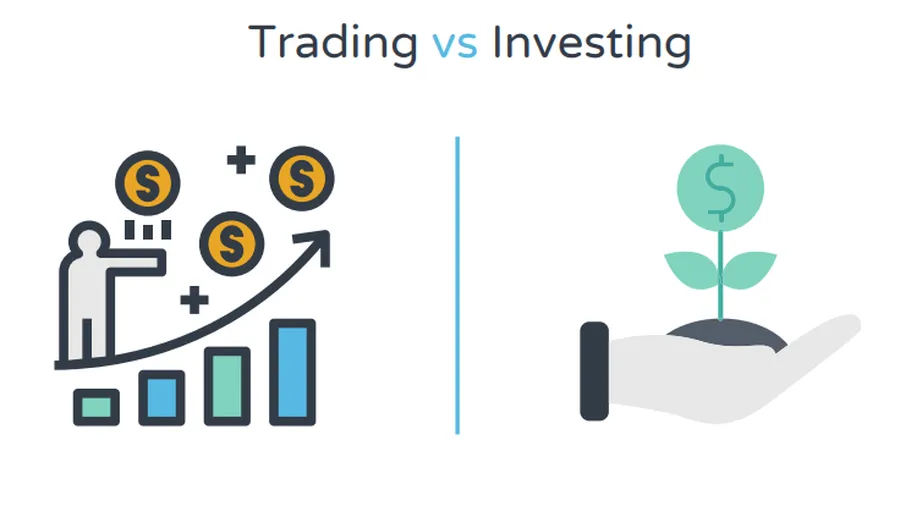
Quick Summary: Day Trading vs Long-Term Investing
Day trading tries to profit from small price moves within hours or minutes and requires full-time attention, advanced skills, and high risk tolerance. Long-term investing involves buying quality assets and holding them for years, relying on overall market growth and compounding. Most people are far better suited for long-term investing.
Quick Answer: Day Trading vs Long-Term Investing
Day trading is active, high-risk, and time-intensive – most participants lose money. Long-term investing is passive, lower-risk, and historically rewarding for patient investors. For the vast majority of people, especially beginners, long-term investing delivers better results with far less stress.
Time Horizon and Daily Commitment
The most obvious difference is how long you hold investments. Day traders close all positions before the market ends each day, sometimes making dozens of trades in hours. They need to watch screens constantly and react quickly to news and price changes.
Long-term investors buy assets they believe will grow over years or decades. They check their portfolio occasionally – maybe once a month or quarter – and spend very little time actively managing it. This approach fits around a full-time job and family life.
If you have a regular job and limited free time, long-term investing is almost always the more realistic choice.
Risk Levels – How Much Can You Lose?
Day trading carries very high risk. Because positions are held for short periods, small price swings can cause big percentage losses, especially when using leverage or margin. Studies consistently show that 80-95% of day traders lose money over time.
Long-term investing has much lower risk when done properly through diversified index funds. While the market can drop 20-50% in bad years, it has always recovered and reached new highs over longer periods. Historical data shows positive returns in the vast majority of 10+ year periods.
Skills and Knowledge Needed
Successful day trading requires deep knowledge of technical analysis, chart patterns, order types, market psychology, and fast decision-making under pressure. It often takes years of practice and many traders never become consistently profitable.
Long-term investing mainly needs basic understanding of diversification, compound interest, and patience. You don’t need to predict daily market moves. Reading simple financial news and sticking to a plan is usually enough.
For beginners, long-term investing requires far fewer specialized skills.
Costs, Fees, and Expenses
Day traders face higher costs: frequent commissions (even if low), bid-ask spreads, platform fees, and data subscriptions. These small costs add up quickly with many trades and can erase profits.
Long-term investors benefit from very low expense ratios on index funds (often 0.03–0.10% per year) and minimal trading activity, so costs stay low and more of your money stays invested and compounding.
Taxes and Regulatory Differences
In many countries, short-term gains from day trading are taxed at ordinary income rates, which are higher. Frequent trading can also trigger pattern day trader rules requiring minimum account balances.
Long-term investments held for more than one year often qualify for lower capital gains tax rates. This tax advantage significantly improves net returns over time.
Realistic Returns and Historical Data
Professional day traders who survive long-term aim for small daily gains, but after costs and taxes, net returns are often modest or negative for most. The majority lose money.
Long-term investing in broad stock indexes has delivered average annual returns of approximately 10% (including dividends) over many decades, or about 7% after inflation. The longer the holding period, the more consistent the positive outcome.
| Aspect | Day Trading | Long-Term Investing |
|---|---|---|
| Time Commitment | Full-time (hours daily) | Few hours per month |
| Risk Level | Very High | Moderate (with diversification) |
| Success Rate | ~5-20% profitable long-term | High with index funds |
| Typical Annual Return (net) | Highly variable, often negative | ~7-10% historical average |
Psychological and Lifestyle Differences
Day trading is stressful. Constant monitoring, quick decisions, and the emotional rollercoaster of wins and losses can lead to burnout and poor decisions driven by fear or greed.
Long-term investing promotes calm and discipline. You focus on your plan rather than daily noise. This approach fits better with a balanced life and reduces the chance of emotional mistakes.
Who Should Choose Day Trading vs Long-Term Investing?
Long-term investing suits almost everyone – students, employees, parents, and retirees. It requires discipline and patience but works with almost any schedule and starting amount.
Day trading is only suitable for a small group of people who have significant time, capital, strong emotional control, and are willing to treat it like a full-time professional job – and even then, success is not guaranteed.
For most beginners, the evidence strongly favors long-term investing. See our guide on best long term investment strategies for beginners for practical next steps.
FAQs – Day Trading vs Long Term Investing
Can I do both day trading and long-term investing?
Yes, but most people find it better to focus on one approach. Many successful investors keep a small “play” account for short-term ideas while the majority of their money stays in long-term holdings.
Is day trading gambling?
It can feel like it for many because of the high failure rate and reliance on short-term price movements. Long-term investing is more like owning pieces of real businesses that grow over time.
How much money do I need to start long-term investing?
You can start with very small amounts today thanks to fractional shares. $100 is enough to begin.
Which has better returns?
Long-term investing in diversified markets has delivered more consistent and reliable returns for the average person. Day trading returns are highly variable and often negative after costs.
Conclusion
Day trading and long-term investing are fundamentally different approaches. Day trading is fast, stressful, expensive, and risky – suitable only for a small percentage of highly skilled individuals. Long-term investing is slower, calmer, cheaper, and historically far more successful for ordinary people.
For the vast majority of beginners and everyday investors, the evidence clearly points toward long-term investing. Start small, stay consistent, diversify, and give your money time to grow. The biggest advantage you have is time – use it wisely.
Ready to begin? Check our guide on how to start investing with $100 for beginners or explore best long term investment strategies.
Data Sources & References
Historical market returns based on S&P 500 data over multiple decades. Day trading success rate statistics drawn from regulatory studies and broker analyses. All investing involves risk, including loss of principal. Past performance does not guarantee future results.